A polymer clay kit is not ready to use simply because it shows a finished coaster or vase on the box. You need to verify its contents, brand-specific oven instructions, project limits, finishing requirements, and local stock before deciding whether it suits your home, skill level, and available equipment.
Key takeaways
- Check clay weight, colours, tools, finishes, and instructions before comparing prices.
- Confirm the clay’s curing temperature and whether your oven can hold it accurately.
- Plan conditioning, shaping, baking, cooling, and finishing before starting either project.
- Compare polymer clay with air-dry clay, resin, and plaster for your decor goal.
Check the kit contents before you judge its value
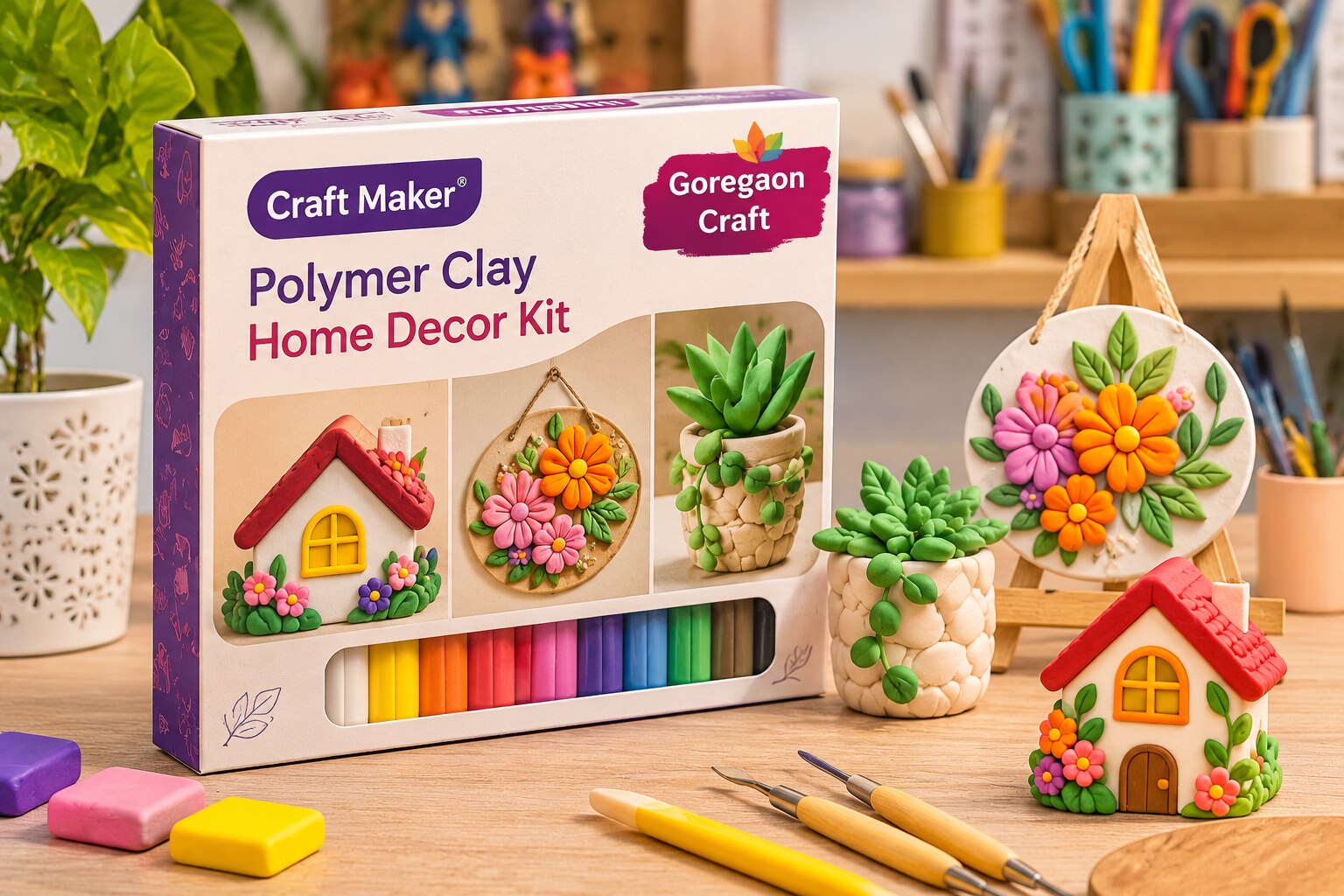
A kit’s photograph is not an inventory. Before judging the Craft Maker Polymer Clay Home Decor Kit, confirm the exact clay weight, colour count, project pieces, tools, finishing products, and instructions listed on the package.
1. Confirm the clay itself: the words “polymer clay,” the brand, net weight, colour names or numbers, manufacturing or batch information, and sealed individual blocks. If the label only says “DIY clay,” do not assume it cures in an oven.
2. Check the project components: a coaster blank, mini-vase form, rigid backing, hanging mechanism, or other base supplied for the finished designs. A pictured display stand or wall hook is not included unless the contents list names it.
3. Count the working tools: cutting blade, roller, acrylic sheet, texture tools, cutters, shaping tools, and a work surface. Ask whether adhesive, sandpaper, paint, varnish, sealant, or decorative hardware is included; missing finishing supplies can make a cheap kit costlier and slower.
4. Look for curing information: baking temperature, time, maximum thickness, cooling instructions, and warnings about ventilation or handling hot pieces. Also confirm whether you must provide the oven, thermometer, baking tray, and baking paper.
5. Ask what the finished objects can do. A coaster may be decorative rather than heat-resistant or waterproof, while a mini vase may not be food-safe or suitable for holding water.
For a polymer clay home decor kit for craft shop Goregaon, confirm replacement clay and airtight storage guidance too. Part-used blocks need wrapping or sealed packaging to keep out dust, lint, grit, and colour contamination.
Confirm the oven, temperature, and handling requirements
Polymer clay stays soft until it is heated, so confirm the curing method before you start. A search phrase such as polymer clay home decor kit goregaon does not prove that the kit includes an oven, thermometer, tray, baking paper, or usable instructions.
Check the package for the exact brand, temperature, baking time, maximum thickness, and cooling guidance.
- Use a household oven, not a microwave. Ask whether the instructions specify Celsius or Fahrenheit, then follow that brand’s temperature and time rather than guessing from another clay.
- Place an oven thermometer inside the oven. Displayed settings can be inaccurate, and excessive heat can darken, scorch, embrittle the clay, or create unpleasant fumes.
- Prepare a flat baking tray and baking paper. Keep the clay on the tray, follow the stated thickness limit, and avoid placing it directly on a food-contact surface.
- Provide ventilation while curing and wash your hands after handling clay. Keep scraps, tools, and uncured pieces away from food preparation areas, children, and pets.
- Let the piece cool completely inside or beside the oven before moving it. Handling hot clay can bend a coaster, distort a mini vase, or cause burns.
- Confirm what happens after curing. Sanding, joining, painting, sealing, or attaching hardware may still be necessary, and a decorative piece is not automatically waterproof, heat-resistant, food-safe, or suitable for holding water.
If the kit gives no clear curing specification, do not infer one from its photographs. Ask for the written instructions before buying.
Plan the two projects from clay conditioning to finishing
Plan about two to three hours of hands-on work for a coaster and three to five hours for a mini vase, excluding curing and cooling. The workload rises when the kit provides loose clay instead of a rigid blank, or only a few colours that require repeated mixing.
- Condition each colour by warming and kneading it until smooth, without trapping air; crumbly clay needs more conditioning, while overheated clay becomes sticky.
- Make the coaster evenly thick, press it onto a rigid blank if supplied, and check that it lies flat before adding texture or a design.
- Build the mini vase over its included form or a suitable armature. Keep the clay layer even; a thin wall bends, while a thick solid form may cure unevenly.
- Bake on baking paper at the stated temperature and time. Do not guess from the sample photograph, and let the piece cool fully before flexing or removing it from a mould.
- Allow extra time for sanding rough edges, joining detached parts, painting, sealing, or attaching display hardware. Confirm that a coaster is heat-resistant and waterproof before using it with drinks, and never assume a vase holds water.
- Wrap leftover clay or place it in airtight packaging away from dust, direct heat, lint, and other colours.
A Craft Maker Polymer Clay Kit in Mumbai is easier for a beginner when it includes blanks, blades, abrasives, adhesive, varnish, and storage packaging. If those are missing, price the extra tools and finishing time before choosing the kit.
Compare polymer clay with other home-decor craft materials
A polymer clay kit is the better choice when you want detailed, reusable material that stays workable until oven curing. It is the worse choice when you lack an oven, need a large rigid object, or expect a coaster or vase to become waterproof, heat-resistant, food-safe, or water-holding without confirming those properties.
| Option | Better choice when | Worse choice when |
|---|---|---|
| Polymer clay kit | You want small, detailed decor with controlled colours and sanding, buffing, or painting after curing. | You need air-drying, a large sculpture, or a project with no access to the stated oven temperature. |
| Air-dry clay | You need a no-oven project, quick setup, or a larger sculpted form. | You need strong thin parts, minimal cracking, or a predictable waterproof finish. |
| Ceramic powder | You want a hard cast object made in a mould and can measure, mix, and demould carefully. | You want to condition and reshape material, or avoid dust, moulds, and breakage during firing or handling. |
| Paper mache | You want lightweight, inexpensive wall decor or a large form over a base. | You need a smooth, dense, moisture-resistant surface or fine small details. |
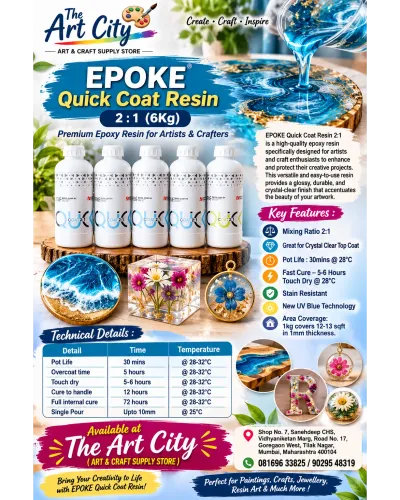
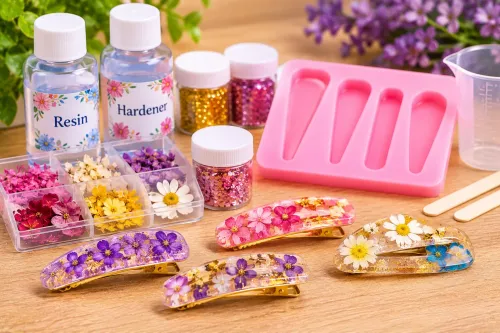
| Epoxy resin | You want a glossy coating, transparent depth, or embedded inclusions. | You want reusable modelling time, simple cleanup, or to avoid mixing ratios, fumes, and curing errors. |
| Separate supplies | You already own tools and want exact clay colours, larger quantities, or replacement blocks without duplicate items. | You need a matched beginner setup and would spend more time sourcing each component. |
Use only varnish, glue, or sealant labelled compatible with polymer clay; an unsuitable coating can stay tacky or react with plasticizers.
Use a Goregaon purchase checklist before you travel
Do not travel with only “polymer clay kit” in mind: “kit” is not a standard quantity or contents category. Call the craft shop Goregaon West first and ask staff to check the physical box, not only an online listing; colour availability changes quickly.
1. What exact brand, colour numbers, net clay weight, and number of blocks are in the sealed box? Ask for the manufacturing date or batch information, and reject a dusty, heat-softened, or damaged package.
2. Does it contain the coaster or vase blank, cutting and shaping tools, finishing materials, storage packaging, and any rigid backing or hanging mechanism needed for your planned object?
3. What baking temperature, time, maximum thickness, cooling method, and ventilation instructions are printed on the package? Confirm whether you must supply the oven, oven thermometer, tray, and baking paper.
4. After curing, is the piece decorative only, or is it waterproof, heat-resistant, food-safe, or suitable for holding water? Do not infer these properties from a photograph.
5. Can you buy replacement clay separately, and how should opened blocks be wrapped or stored to prevent lint, grit, and colour contamination?
Use these questions when you buy polymer clay craft kit in Mumbai, including from ART & CRAFT SUPPLY STORE MUMBAI, because matching the project dimensions to the clay weight matters more than a colourful box. Thin parts bend; thick parts cure unevenly.
Related product
 | ART KIT Craft Maker Polymer Clay Home Decor Kit ₹699 Craft a checkerboard coaster and a charming terrazzo mini vase, all with the versatile and easy-to-use craft of polymer clay. View product → |
Frequently asked questions
What should you check inside a polymer clay home decor kit?
Confirm the clay weight, colour count, project pieces, tools, finishing products, and printed instructions against the package inventory.
How do you confirm a polymer clay kit is suitable for your oven?
Read the clay’s curing temperature and time, then check that your oven can hold the stated temperature accurately and safely.
What is the correct workflow for the kit’s two projects?
Plan each project through clay conditioning, shaping, baking, cooling, and finishing, following the clay manufacturer’s instructions.
How does polymer clay compare with other home-decor materials?
Compare polymer clay with air-dry clay, resin, and plaster by weighing oven needs, working time, strength, finish, and cleanup.
Keywords