The word “Sunflower” identifies a specific shade, not a complete yellow-paint category, so a good purchase depends on checking the exact label, pack condition, and project needs. You will be able to judge the shade, prepare your surface, apply the paint correctly, compare kit and single-colour options, and confirm whether a Goregaon listing matches the product you need.
Key takeaways
- Check that the physical label names the Sunflower shade.
- Match acrylic paint to your surface before starting.
- Build yellow coverage with thin, even layers.
- Compare kit contents, single shades, and local stock before paying.
Check the Sunflower shade before you buy
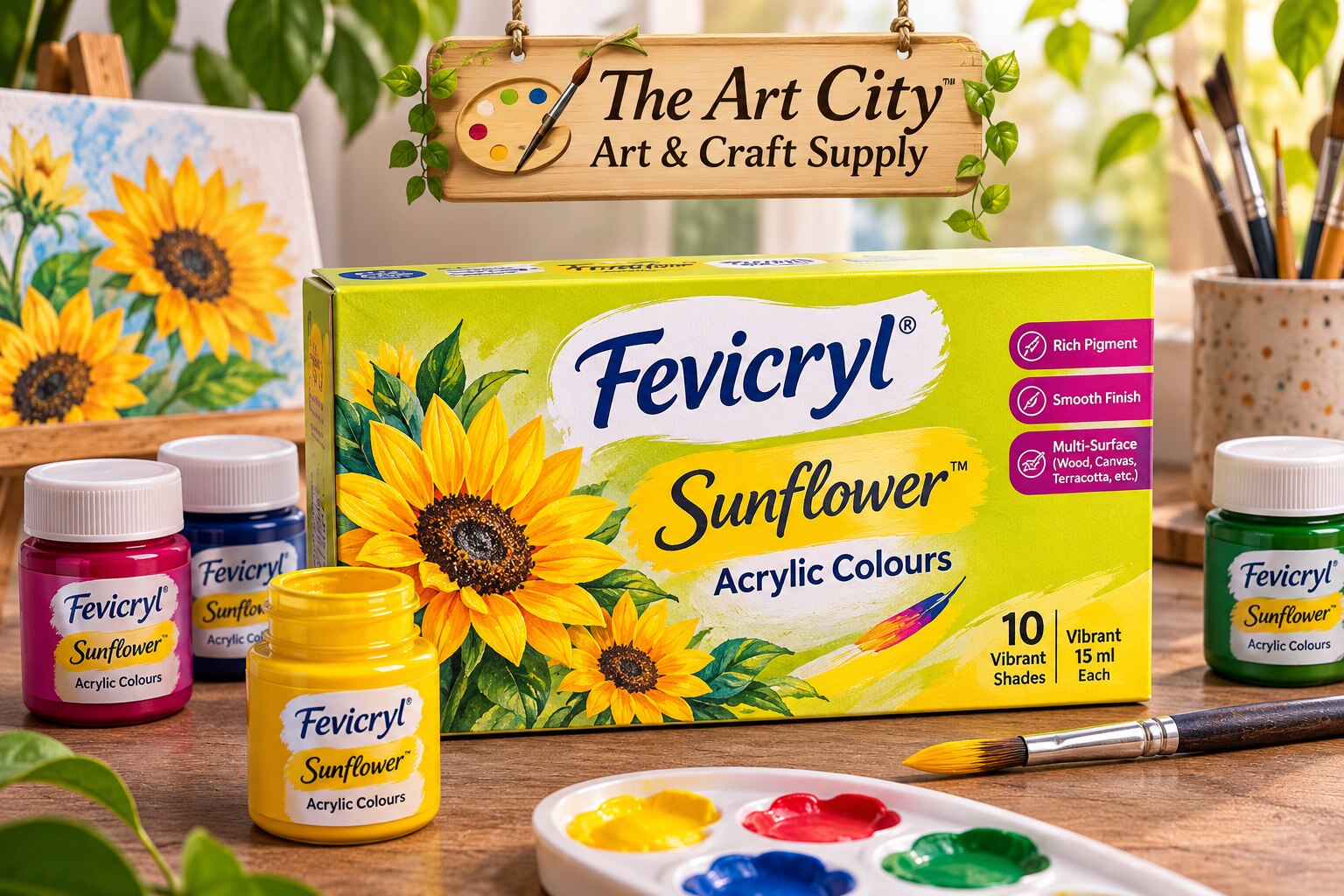
The correct bottle must identify Fevicryl acrylic colour and the shade “Sunflower” on its physical label. Sunflower is a named yellow shade, not a generic description, so do not rely on a marketplace thumbnail or a product photograph; screen settings can make yellow look noticeably different.
Use this check before paying:
- Read the front label and confirm the exact shade name is Sunflower. Note the shade code if one is printed.
- Confirm that the product is an acrylic colour, not fabric colour, glass colour, metallic paint, or another Fevicryl range.
- Check the bottle size, batch number, and maximum retail price against the listing or shelf tag.
- Examine the cap, nozzle, and seal for dried paint, leakage, cracks, or damage.
- Gently shake the bottle. Reject it if the contents remain separated or lumpy instead of remixing.
- If buying a kit, ask for its printed shade list. The kit name alone does not prove that Sunflower is included.
A search for fevicryl sunflower acrylic colours for painting materials goregaon does not confirm that a shop has this shade physically available. Stock changes between a store, its website, and a marketplace. Before travelling, request confirmation of the exact Sunflower bottle, pack size, and quantity.
Apply the same check when comparing fevicryl sunflower acrylic colours in mumbai.
Match the paint to your project and surface
Fevicryl Sunflower suits opaque or semi-opaque hobby work such as flower paintings, mandalas, school projects, canvas art, and decorative objects. Match the paint to a clean, stable surface; glossy, dusty, oily, or damp surfaces cause peeling and uneven coverage.
| Surface or project | Preparation | Main caution |
|---|---|---|
| Canvas painting | Use pre-primed canvas, or apply acrylic gesso to raw canvas and let it dry before painting. | Sunflower may need several thin coats over a dark background. |
| Wooden décor and MDF | Sand smooth with fine-grit paper, remove dust, and apply primer to prevent uneven absorption. | Unprimed wood can make the yellow look dull and patchy. |
| Earthenware and terracotta | Brush away dust, wash off grease, dry completely, and prime porous pieces if you want a smoother finish. | Paint decorative surfaces only; do not assume the result is food-safe or waterproof. |
| Metal tins and décor | Degrease, remove loose rust, lightly sand, and apply a metal-compatible primer. | Bare metal can cause poor adhesion and exposed edges can chip. |
| Leather craft | Clean gently, remove surface polish, and test a small hidden area first. | Flexible leather needs a paint system that will not crack during bending. |
For acrylic colours for hobby painting goregaon projects, do not substitute fabric colour, glass colour, or 3D outliner: each is designed for a different surface or effect. Keep the bottle closed and use small amounts; wash brushes and palettes with water while the paint is wet, because dried acrylic becomes difficult to remove.
Estimate coverage and build an even yellow finish
A 15 ml pot will not cover a fixed area because absorbent surfaces consume more paint than sealed ones. Paint a 10 cm × 10 cm test square with the same brush and number of coats planned for the artwork; multiply that result across the surface, then keep extra paint for edges and corrections.
- Seal porous wood, terracotta, or plaster with a suitable primer or base coat; otherwise the first yellow layer can look dull and patchy.
- Use a clean, dry canvas or paper and apply Sunflower directly when the surface already has an even ground.
- Load a flat or round synthetic brush with a small amount, spread a thin coat, and keep the strokes in one direction on broad areas.
- Let the layer lose its wet sheen and feel dry before recoating. Thin acrylic layers commonly need about 15–30 minutes, while heavy paint or humid conditions take longer.
- Plan on two thin coats for a solid yellow finish. A single thick coat leaves ridges, takes longer to dry, and can lift the layer underneath.
- Work from the larger background areas towards details, and soften visible brush edges while the paint remains workable.
- Pour only a little onto the palette, close the bottle between uses, and rinse the brush promptly; exposed acrylic can skin over or harden quickly.
For a frequently handled object, apply a compatible clear finish only after the painting has fully dried. Test it on a spare painted sample first because it can alter gloss, colour depth, and surface feel.
Mix useful colours without creating muddy blends
Start with Sunflower and white when you need clean tints. Add a small amount of white to a measured pool of Sunflower, mix thoroughly, then increase the white gradually; adding yellow to a large amount of white makes the colour easier to control. Use a separate palette area for every tint.
For useful secondary colours, begin with fresh paint and add the stronger colour in small amounts:
- Sunflower plus red creates orange. Start with roughly three parts Sunflower to one part red, then adjust toward a warmer or deeper orange.
- Sunflower plus blue creates green. Add blue gradually because it can overpower yellow quickly; use more Sunflower for a yellow-green and more blue for a cooler green.
- Sunflower plus a trace of red or burnt brown creates muted gold or ochre. Add the darker colour with the tip of your brush.
Use a clean, dry brush for each mixture. Residue from blue, red, or brown can turn a bright yellow blend dull before you notice it. Mix only the amount needed, and keep complementary colours apart instead of repeatedly stirring them together; excessive mixing produces grey-brown mud.
Test each mixture on the same surface as your artwork and let it dry before committing, because acrylic colour can look different when wet. For lighter variations, white is safer than adding water, which can make the paint thin and uneven.
Compare the kit, single shades, and local stock before paying
A Fevicryl acrylic colour kit in Goregaon is the better buy when you are starting a mixed-colour project, need several shades for school work, mandala details, or small canvas pieces, and expect to use most of them.
Choose a single shade when Sunflower is the only colour you need; a kit may not include Sunflower, useful mixing colours, a brush, primer, palette, or the required surface.
| Option | What you receive | When it applies |
|---|---|---|
| Kit | Multiple small colours | Beginner projects using several shades |
| Single Sunflower bottle | Only the selected shade | Colour matching, touch-ups, or a yellow-led project |
| Larger individual colour | More paint in one shade | Repeated work on several surfaces |
Before paying at a painting materials shop in Mumbai, confirm:
- The exact range says Fevicryl Acrylic Colours, not Fabric Colour, Glass Colour, or 3D Outliner. These products are not interchangeable.
- The bottle label says Sunflower and shows the shade code, if printed. Do not trust a marketplace thumbnail to show the correct yellow.
- The bottle size, batch number, seal, and maximum retail price match what you intend to buy.
- The retailer has the exact number of bottles physically available in Goregaon; an online listing can remain live after shade-level stock changes.
- The kit’s actual shade list includes the colours your project requires.
ART & CRAFT SUPPLY STORE MUMBAI can help compare a kit with individual bottles, but make the same checks before travelling or paying.
Related product
 | ACRYLIC COLOURS ₹225 Vibrant Colours - Make paintings pop out using the 10 vibrant shades. View product → |
Frequently asked questions
How can I confirm that a bottle contains Fevicryl Sunflower acrylic colour?
Check the physical label for the Fevicryl acrylic colour name and the shade “Sunflower.” Do not rely on a marketplace image because screen settings can alter yellow.
Which surfaces suit Fevicryl Sunflower acrylic colour?
Match the paint to the project surface, such as canvas, paper, wood, or suitable craft materials, and prepare smooth, clean surfaces before painting.
How can I create an even yellow finish?
Estimate the surface area, apply thin consistent coats, and allow each layer to dry before adding paint. Extra layers improve coverage without flooding the surface.
How can I mix colours without making muddy blends?
Use a clean palette and brush, add small amounts of darker or complementary colours gradually, and avoid repeatedly stirring several pigments together.
Should I buy a kit or individual Fevicryl acrylic shades?
Choose a kit when you need several coordinated colours. Buy single shades when Sunflower is the main requirement, then compare bottle size, included colours, and local stock before paying.
Keywords